
A new report reveals that enterprise AI investment in India has surged by 119 per cent, exceeding the global average. However, only 22 per cent of Indian organisations have established adequate governance frameworks, creating a significant gap between rapid deployment and safe, scalable AI adoption. This lack of governance impacts operational depth and raises concerns about transparency, regulation, and data privacy.

Fintech firm PhonePe has signed a Memorandum of Understanding (MoU) with the Ministry of Electronics and Information Technology (MeitY) to integrate its enterprise data intelligence platform, PulsePro, into the PM GatiShakti framework. This collaboration aims to provide granular, hyperlocal insights for national infrastructure planning, economic analysis, and holistic urban and rural development.

CAG Sanjay Murthy has urged statutory auditors to enhance their scrutiny of Public Sector Undertakings (PSUs) by examining systems, testing controls, and utilising data analytics to identify unusual transactions. Speaking at a workshop, Murthy stressed the importance of auditors understanding business to challenge judgments and ensure audits lead to better enterprise decisions. He also highlighted the critical need for PSUs to treat cyber security and data governance as core business risks, advocating for boardroom discussions on these issues and prompt incident reporting.

Data infrastructure company NetApp has introduced Novus, a new storage architecture designed for large-scale AI factories, alongside significant enhancements to its AI Data Engine, hybrid multi-cloud operations, and strategic partnerships with Nutanix and SAP. These initiatives aim to improve data management, security, and efficiency for AI workloads and enterprise cloud infrastructure.

Indian AI company Sarvam has appointed Sashikumar Sreedharan, former Managing Director for India at Google Cloud, as its President and Chief Business Officer. He will lead business operations across enterprises and government, expanding Sarvam's reach with digital-native companies and partners, as the company grows its customer base and product development.

Artificial intelligence major Anthropic has launched AI inference capabilities in India through Amazon Bedrock, allowing its Claude AI models to process data within the country's jurisdiction. This strategic move addresses the growing demand from Indian entities, particularly in regulated sectors, for compliance with local data processing norms as per the Digital Personal Data Protection Act. The initiative strengthens Anthropic's commitment to the Indian market, enabling secure and compliant AI deployment for sensitive workloads and fostering trust among major enterprises like Reliance, CRED, and NPCI.

Wipro has launched its AI-Data Centre solution, integrating NVIDIA's AI Enterprise platform, to accelerate enterprise-scale AI adoption and modernise data centre environments.
The move comes amid growing demand from organisations in India for local access to Claude.

State Bank of India (SBI) is developing an innovative solution to assess the creditworthiness of small businesses lacking GST registration by utilising UPI transaction data. This initiative aims to provide end-to-end digital loans within a day, addressing the financial exclusion of many small enterprises.

'Cybersecurity preparedness is very weak.'

IBM India and South Asia MD Sandip Patel stated that India is at a defining moment with a unique opportunity to shape exponential technologies like artificial intelligence, emphasizing that "when India builds, it builds for billions," leading to scalable impact. Speaking at the IBM Think 2026 event, Patel highlighted that the AI revolution is still in its early stages, requiring enterprises to redesign their operations around agents, real-time data, automation, hybrid architecture, and trust. He also introduced the concept of "digital swaraj" or sovereignty in the Indian context, stressing the importance of control over operating environments, data, technology, and AI execution. IBM also announced an MoU with MeitY Startup Hub to accelerate India's deep tech innovation and startup ecosystem, providing startups access to IBM's technology expertise and platforms like watsonx and Sovereign Core.

ideaForge Technology has received an order from the Survey of India for its Q6 V2 unmanned aerial vehicles. These advanced, DFCA-certified drones will enhance the Survey of India's ability to collect high-quality aerial and geospatial data for surveying and mapping across diverse terrains, offering efficient and rapid deployment for large-scale projects.

Nasscom President Rajesh Nambiar stated that artificial intelligence is not making India's Business Process Management (BPM) industry obsolete but is instead driving its significant reinvention. He highlighted that the sector has an opportunity to become the world's "intelligent operations and transformation hub" by leveraging AI, analytics, and cloud-based operations, moving beyond traditional call centres. Nambiar outlined three key priorities for the industry, including reimagining processes, building hybrid human-AI operating models, and redefining India's global BPM representation.

Hitachi Systems India has launched a new Advanced Global Delivery Centre in Bengaluru, collaborating with CrowdStrike. This centre aims to provide AI-powered protection against emerging AI risks, helping organisations in India, Asia Pacific, and West Asia modernise security operations and secure AI adoption. It will offer integrated protection across various security domains, including CrowdStrike's Falcon Guardian and Project QuiltWorks.

A joint report by OPPI and EY reveals that India's pharma Global Capability Centres (GCCs) contribute an estimated USD 10.5 billion in GVA and employ 120,000 professionals. These centres, operated by 80% of top biopharma companies, are expanding beyond delivery to global mandates in science, technology, and business, leveraging India's talent, cost advantage, and digital strength. The report highlights their role in India's transition to a global pharma powerhouse driven by research and innovation, with AI becoming central to operations.

State Bank of India (SBI) Chairman C S Setty has warned that artificial intelligence-related errors could cascade across interconnected financial systems, creating significant governance risks for institutions. He emphasised the critical need for clearly defined permissions, transaction limits, audit trails, and human intervention mechanisms as banks increasingly deploy autonomous AI systems.
Salesforce executives, including South Asia CEO Arundhati Bhattacharya, predict a significant shift in India towards wider enterprise AI adoption, moving from experimentation to production deployments. The company plans to invest in physical infrastructure and talent upskilling in India. Salesforce's vision for the "agentic enterprise" involves a four-layer architecture, emphasising the need for robust security and governance for autonomous agents. Executives also highlighted the evolving nature of jobs, with AI handling repetitive tasks and creating new specialised roles, positioning India as a potential leader in agentic innovation by 2030.

Accel-backed Dreamteam has raised USD 53 million to scale its AI-powered CRM model, which uses AI agents to automate sales workflows and gather customer intelligence from conversations, emails, and meetings. Founded by former Freshworks executives, the company aims to redefine the CRM market by allowing sales teams to focus on relationships and closing deals, with customers already seeing significant benefits.

SAP has announced new programmes to train two million people in India with AI-ready skills by 2030, as part of its global initiative to upskill 12 million individuals worldwide. The company will collaborate with academic institutions, industry partners, and government bodies to expand access to AI, cloud, data, and enterprise technologies, leveraging India's significant role in the global tech workforce.

SpiceJet's board has approved a proposal to raise up to Rs 5,500 crore through various financial instruments, including equity, as the airline grapples with significant unpaid dues, salary delays, and operational disruptions. The move aims to address cash-flow constraints and strengthen its balance sheet amidst ongoing financial and regulatory scrutiny.
HCLTech has launched 'HCLTech Pulse', a new business unit designed to help enterprises with annual revenues between USD 500 million and USD 5 billion accelerate their adoption of artificial intelligence and modernise their technology infrastructure, targeting a USD 400 billion global market opportunity.

'The fact that nearly Rs 1 trillion came through fresh capital issuance is particularly encouraging, as it represents resources being channelled directly into business expansion, capacity creation, and growth.'

Pragya Misra, OpenAI's head of public policy and strategy for India, stated that the next phase of AI will concentrate on driving measurable outcomes rather than mere experiments. She highlighted examples like Cars24 using AI for customer retention and a healthcare company building its CRM with OpenAI's Codex, demonstrating AI's tangible business impact and cost-saving potential. OpenAI aims for artificial general intelligence (AGI) to benefit all humanity by making AI accessible and addressing enterprise concerns like data residency.

India is ranked as a "Rising Contender" in AI by Boston Consulting Group (BCG), indicating high readiness but lower disruption exposure. The report highlights India's strength in its large pool of AI specialists and IT-services workforce. While not yet an "AI Pioneer," India is leveraging its talent advantage, with government initiatives like Yuva AI for ALL and IndiaAI FuturesSkills aiming to upskill citizens and broaden access to AI education. The report emphasizes that execution and talent deployment are crucial for economies to gain ground in AI.
Oracle India head Shailender Kumar states that Indian businesses have transitioned from AI pilot projects to full-scale deployment, realizing significant benefits. While challenges like cost, skills, and infrastructure exist, companies are keen to adopt AI once tangible advantages are proven, with governance and regulation evolving alongside the technology's maturity.
Workday, a global HR tech major, has unveiled its new AI platform, Sana, designed to automate human resources and finance functions. Chairman and CEO Aneel Bhusri stated that AI is likely to replace low-cost, outsourced jobs due to increased productivity, rather than leading to jobs moving out of first-world countries. The platform uses AI agents for tasks like payroll and compliance, and Workday has acquired C1.ai to manage access rights for these agents. Bhusri emphasised that AI should augment humans, redefining roles rather than replacing them entirely.

HCLTech, India's third-largest IT services company, announced plans to establish a global technology centre and an AI-optimised data centre in Bhubaneswar, Odisha, with a total investment of approximately Rs 15,000 crore, marking its entry into the AI infrastructure business.

'... but runs with the rigour and discipline of a large enterprise.'
A joint report by Dell Technologies and Zinnov reveals that despite high ambition, nearly 70% of India's Global Capability Centres (GCCs) are stuck at the pilot stage for AI adoption. Foundational gaps in data, infrastructure, and governance are identified as key bottlenecks preventing the scaling of AI initiatives into enterprise-wide production. The report highlights the need for significant reskilling of the workforce and robust foundations for industrialising AI responsibly.

For the first time, co-working spaces have surpassed the IT/ITeS sector as the largest occupier of office space in India during the January-September period, indicating a significant shift towards flexible workspaces, according to Anarock Research & Advisory.

NetApp CEO George Kurian announced that India is the company's fastest-growing market in Asia, driven by strong performance in BFSI, manufacturing, IT services, and public sectors. The company's Bengaluru global capability centre is its largest, housing 4,000 engineers and leading global R&D. NetApp also unveiled new AI-focused storage solutions and cloud partnerships at its Insight event.
ServiceNow has announced an expansion of its AI Control Tower offering with new capabilities that give enterprises control over every AI system, agent, and workflow, regardless of where it runs.

Infosys CEO Salil Parekh stated on Tuesday that the company's AI services, currently contributing over 8% of revenue, are growing rapidly and could account for almost half of its work within two to three years. He highlighted the strong demand for AI services, the company's hiring and training efforts for graduates in AI, and discussed potential risks like infrastructure challenges and societal backlash.
Mahindra Group's Bristlecone, a supply chain services provider, has reported a 24 per cent year-on-year topline growth and aims for a billion-dollar valuation. The company is expanding its offerings in AI, data analytics, and product engineering, focusing on resilient supply chains for global enterprises.
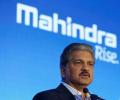
Bristlecone, a Mahindra Group company, reported a 24% year-on-year topline growth and aims for a billion-dollar valuation. The AI-powered supply chain services provider is expanding its offerings to include data analytics, AI, and product engineering, focusing on making supply chains more resilient for its global clients across high-tech, retail, manufacturing, and life sciences segments.

Jio Platforms Ltd's Rs 30,213-crore initial public offering was subscribed 3.01 times, attracting approximately Rs 66,500 crore in public bids, with qualified institutional buyers oversubscribing their portion by 9.02 times, while retail investor demand remained under-subscribed at 0.68 times.
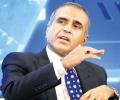
'The Rs 35,000 crore of capex every year, I don't get to sign 35 paise out of this.'

Jio Platforms' initial public offering has garnered an overwhelming institutional demand of approximately Rs 2.5 lakh crore, significantly exceeding its Rs 8,110-crore anchor book, with global and domestic investors vying for a stake in the Reliance Industries subsidiary.

The Union finance ministry has constituted a high-level committee, chaired by former Central Vigilance Commissioner Suresh N Patel, to recommend structural, regulatory, and legislative reforms for India's banking sector, aiming to make banks globally competitive and support the financing needs of a developed economy.

India's cybersecurity agency, CERT-In, has issued a critical advisory warning about autonomous AI agents accessing sensitive data of Indian organisations without authorisation. Government sources on Friday emphasised the need for companies to bolster cybersecurity measures and monitor system activity, noting that while no major compromise occurred, the incident serves as an early warning. Future AI regulation is expected to address the risks posed by these agents.
